How Omotesando developed into a trendy area
Its origins lay in the opening of an avenue leading to Meiji-Jingu Shrine in 1920. There are a number of reasons behind its birth as a trendy area. One reason is the appearance of the Doujunkai Aoyama Apartments where high-ranking officials and people of culture had resided and the Washington Heights (the facility that housed GHQ officers) that was constructed after the 2nd World War. The Washington Heights was then opened as the Athletes’ Village at the 1964 Tokyo Olympics, and for other reasons, Omotesando developed into an area rich with international flavor. Along with the postwar recovery, it transformed into a fashionable district.
High-class brands and cool fashion & miscellaneous goods abound
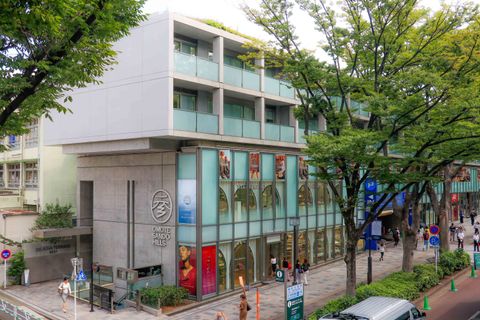
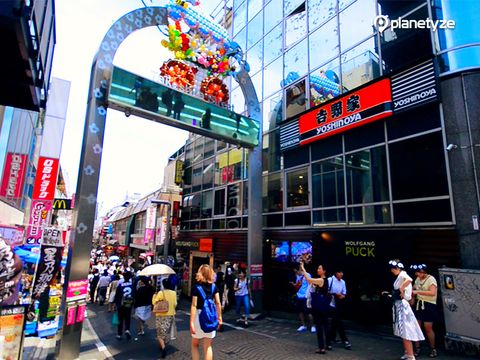
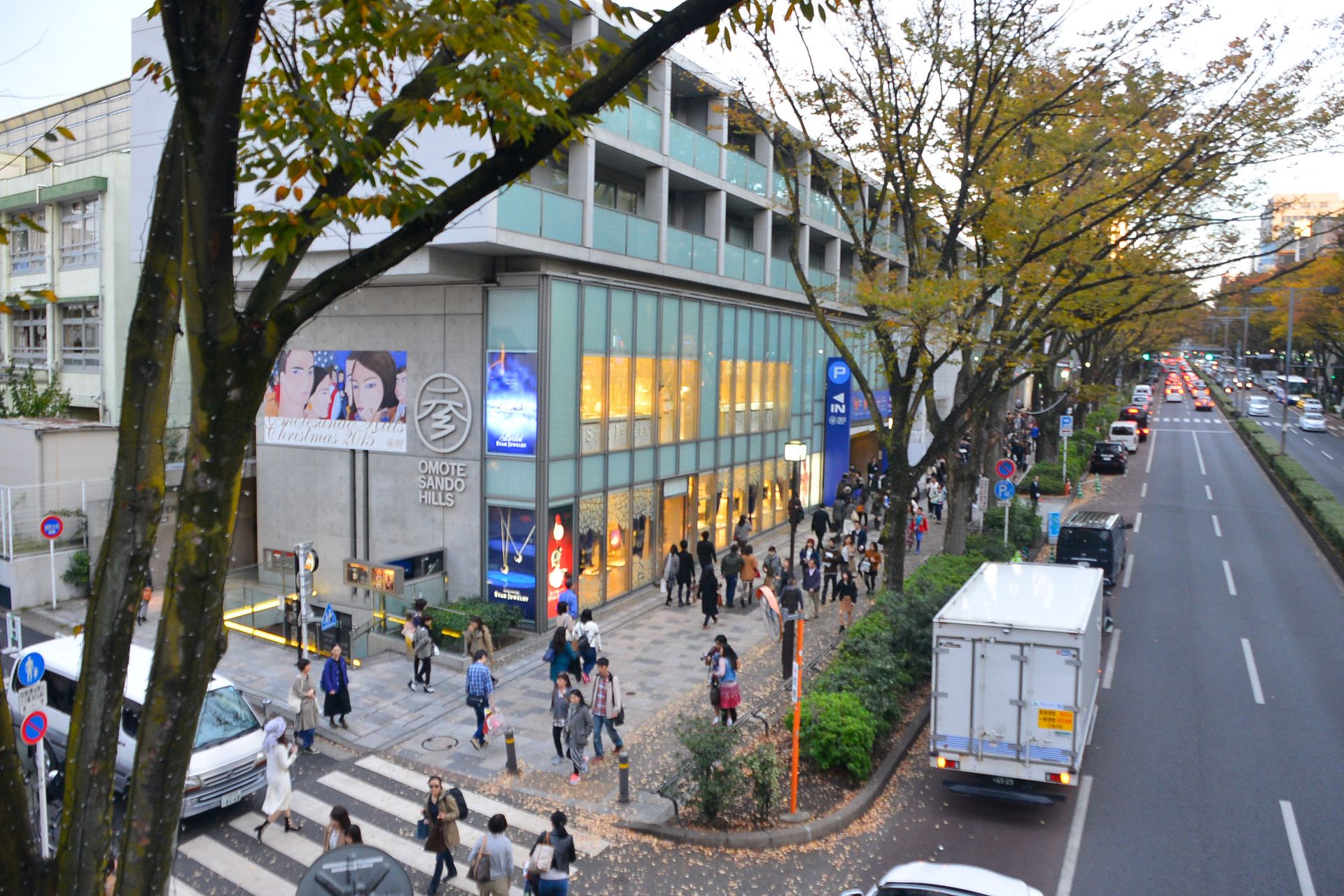
Omotesando Hills was built on the site of the former Doujunkai Apartments in 2006. With 6 floors above ground and 6 floors underground, about 100 branches of specialty shops exist. High-quality and individualistic fashion styles that don’t fade in or out are introduced. The fashion theme park, Tokyu Plaza Omotesando-Harajuku was opened in 2012. In the park there is Omohara Station, a space that exhibits brands that are arriving in Japan for the first time and seasonal shops along with a café that produces its own sweets, and on the roof, there is Omohara-no-Mori, a place of relaxation. A new type of interaction is happening as a shopping area for the next generation. Also, adjacent Harajuku has a strong image for being lively but when you enter its back streets, the stores lined up there are quiet and have their own character, and you can come across clothing and other items that are quite chic.
The return of the Christmas lights
From 1991to 1998 in December, there was Christmas illumination on a large scale through bulbs intertwined in the zelkova trees lining the main avenue. People everywhere gathered in Omotesando and it became very popular, but it was eventually cancelled due to dissatisfaction with the spectators and the large burden on the trees. However, there were voices among the local citizens who wanted to bring out some cheer from Omotesando so the lights returned in 2009, the first time in 11 years. LED lights were placed on roughly 100 of the zelkovas. A way to put the lights on has been devised so that there is little burden on the trees. Even after the return, it has been bringing about a bold character as a pioneer in Japanese illumination.