Red torii gates and white foxes – the symbols of Fushimi Inari Shrine
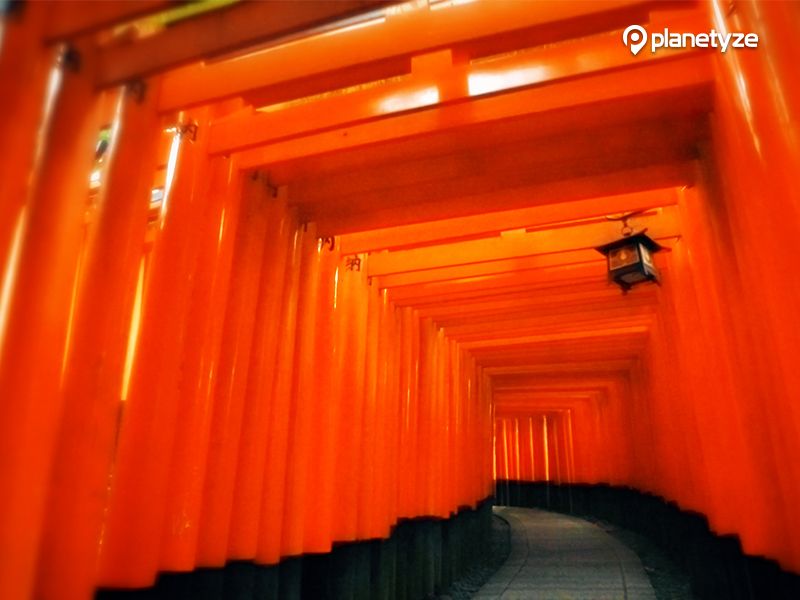
For more than 1,300 years, people have come to Fushimi Inari Shrine to worship the Inari God that assures bountiful crops. The shrine is the headquarters of the more than 30,000 inari shrines across Japan. The red torii gates and white foxes are the symbols of Fushimi Inari Shrine. It is said that the red color of the torii gates and the shrine building has power against supernatural powers and that the color also indicates the bountifulness of the Inari God. Foxes are believed to be the servants of the Inari God; it is said that foxes were chosen as the God’s servants because they prey on crop damaging mice and also because the color of the fox and the shape of their tails resemble ripe rice plants. Replacing the usual guardian dogs, a pair of foxes is placed at the Roumon gate as protectors against evil.
Senbon Torii – the highlight of Fushimi Inari Shrine
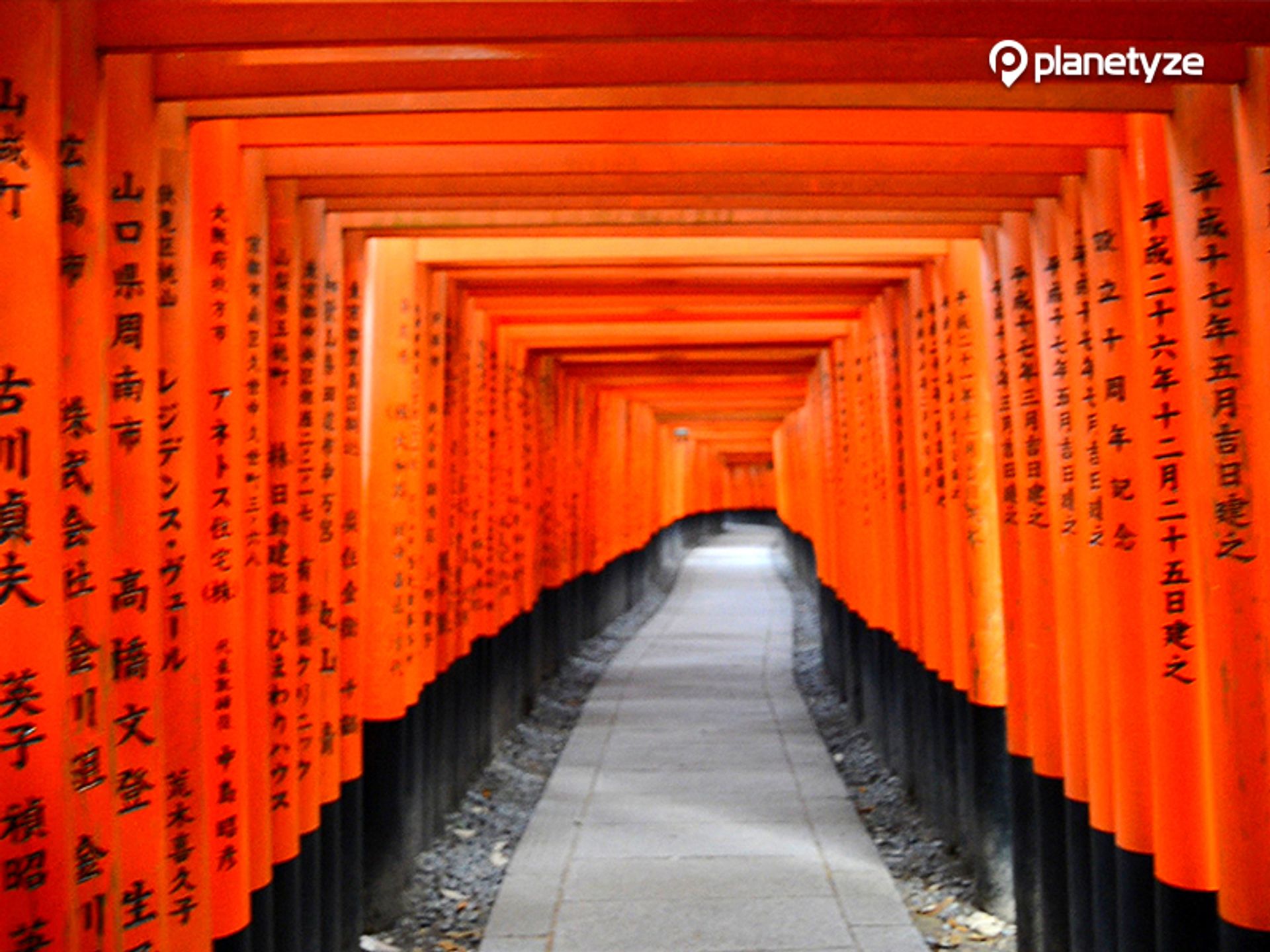
The row of torii gates called Senbon Torii is the highlight of this shrine. Senbon Torii came about due to the custom that has spread since the Edo period (1603 – 1868) to dedicate a torii gate to the shrine to express gratitude regarding the worshiper’s wish that “will come true” or “did come true.” At present, nearly 10,000 torii gates line the main path and the tradition of donating a gate is still practiced today. Based on the idea that assuring bountiful crops for farmers is relevant to assuring prosperous business for merchants, since the Edo period and onward, the Inari God has been worshiped also as a god that assures prosperous business. The grounds of the shrine stretch to Mount Inari; it takes more than two hours to cover the approx. 87 square meter shrine premises. The Senbon Torii is a short walk away from the main sanctuary. From there, as you walk toward the mountain peak, you will reach the crossroad (yotsutsuji) where you can view the entire city of Kyoto. You can also rest at a tea house while enjoying this magnificent view. Though the shrine is opened to the public 24 hours a day, we recommend visiting the shrine during the day because it has many stone steps and the lighting during the night is limited.